

Table of Contents
- Why Graphic Tees Need Special Care
- What You'll Need Before You Start
- How to Wash Graphic Tees Properly: Step-by-Step
- How to Wash Printed T-Shirts by Print Type
- Hand-Washing Delicate or Valuable Graphic Tees
- Best Detergent for Graphic Tees
- How to Dry Graphic Tees Without Cracking the Print
- How to Remove Stains from Graphic Tees
- Frequently Asked Questions
Last Updated: October 21, 2026
Why Graphic Tees Need Special Care
A graphic tee is a cotton shirt with a printed design bonded to the fabric surface, and that print is the part most likely to fail first.
Heat breaks down print adhesives, friction chips away at cured ink, and harsh detergent strips dye from both the design and the cotton around it. Most premature cracking comes down to three habits: hot water, high heat drying, and rough laundry loads.
What You'll Need Before You Start
Gather these supplies before you touch the washing machine, so you are not improvising mid-load.
- A mesh laundry bag for delicate or high-value prints
- Mild liquid detergent, free of dyes and bleach
- A stain pre-treatment option (more on types below)
- A drying rack or a clothesline
- A laundry basket reserved for printed shirts
Check the care label first. It is the manufacturer's instruction for that specific garment, and it overrides general advice. If the label says hand wash only, believe it.
How to Wash Graphic Tees Properly: Step-by-Step
Follow these five steps, from sorting to drying, and you remove nearly every common cause of print damage.
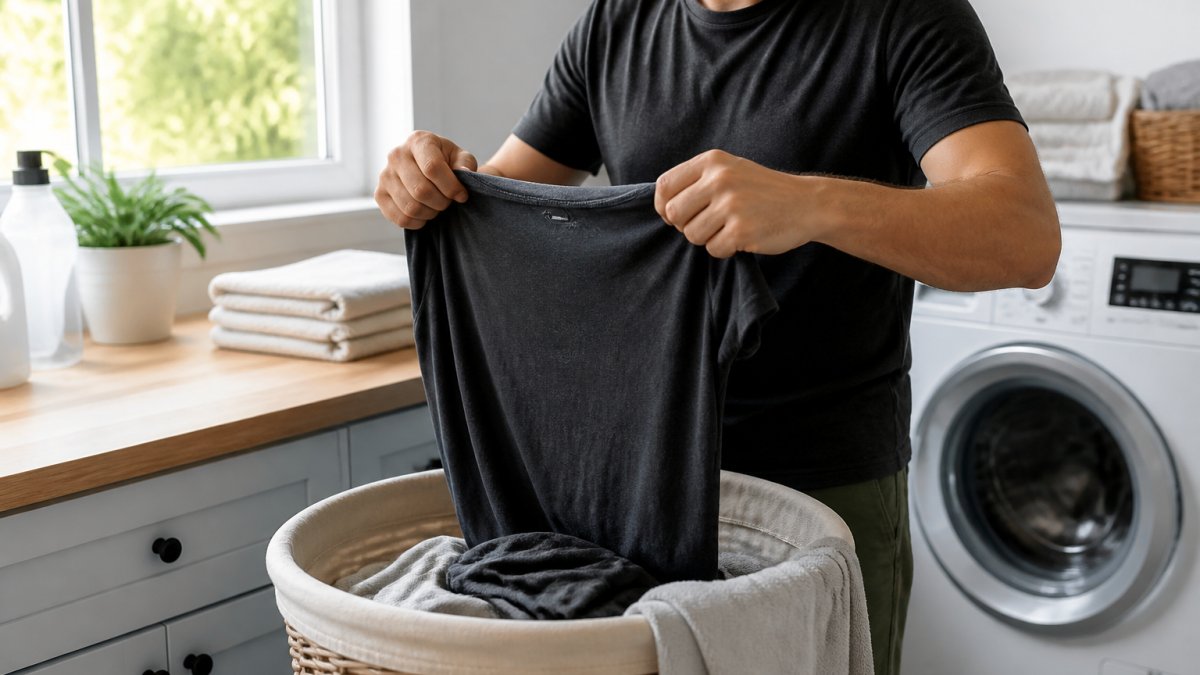
Step 1: Turn the Tee Inside Out
Turning the shirt inside out puts the fabric between the print and everything else in the drum, so the design never rubs against other garments, zippers, or the machine wall.
Do this every wash. It takes two seconds and is the highest-value habit on this list.
Step 2: Sort and Separate Your Laundry
Keep graphic tees out of loads with abrasive items: no towels, no jeans with metal rivets, no exposed zippers or buttons. Wash printed shirts together, or with soft knits and light cottons.
Sort by color too. A new dark tee can bleed dye onto a light one in a cool wash.
Step 3: Choose Cold Water and a Gentle Cycle
Cold water slows dye loss and keeps print adhesives from softening, while a gentle cycle's slower agitation means less friction against the fabric.
Set the machine to cold, then select the delicate cycle. If your machine has a low-spin option, use it.
Step 4: Add the Right Amount of Detergent
Use mild liquid detergent and measure it. Extra soap leaves residue that dulls a print and traps dirt over time.
Skip fabric softener entirely. It coats fibers and can break down the bond between ink and cotton.
Step 5: Skip the High Spin and Extra Rinses
High spin speeds press the print against the drum wall with real force, and extra rinses add agitation for no benefit.
Choose the lowest spin setting available. Pull shirts out promptly when the cycle ends so wrinkles do not set.
How to Wash Printed T-Shirts by Print Type
| Print Type | How It Sits on Fabric | Main Risk | Wash Approach | Dry Approach |
|---|---|---|---|---|
| Screen print | Cured ink layer sitting on top of the fabric | Cracking and flaking from heat and friction | Cold, inside out, gentle cycle, mild liquid detergent | Air dry; low heat only if unavoidable |
| Heat transfer | Adhesive film bonded to the fabric surface | Edge lifting and peeling | Cold, inside out, hand wash preferred, no dryer | Air dry flat; never machine dry |
| Direct-to-garment | Ink absorbed into the cotton fibers | Gradual fading and dulling | Cold, mild detergent, shorter cycle | Air dry away from sun |
| Sublimation | Dye bonded into polyester fibers | Fading from heat and harsh detergent | Cold, gentle cycle, no fabric softener | Air dry; low heat tolerated better than cotton prints |
| Embroidery | Thread stitched through the fabric | Snagging, pilling, thread breakage | Inside out in a mesh bag, gentle cycle | Air dry flat to avoid stretching |
Screen print is the most durable common method: thick ink cured onto the fabric handles regular gentle washing well.
Heat transfer designs are the most fragile.
Direct-to-garment prints sit inside the cotton fibers rather than on top.
Sublimation prints are dye bonded into polyester, not a layer on top.
Embroidery is a different problem entirely. The risk is snagging, not ink failure.
"No Need to Drink the Entire Sea" Salty Ocean Graphic Tee →
Hand-Washing Delicate or Valuable Graphic Tees
Hand washing gives you full control over temperature, agitation, and soak time. Use it for heat transfer prints, vintage shirts, embroidery, or any tee you would hate to ruin, and whenever the label says hand wash only, a print edge has started to lift, or you are treating a stain you do not want to spread.

When Hand Washing Is Worth It
Machine wash on a gentle cycle if the shirt is a screen print or direct-to-garment print in good condition and the label allows it. Hand wash if any of these are true:
- The label says hand wash only
- The print is a heat transfer or has a lifted edge
- The shirt is vintage or has embroidery, rhinestones, or other embellishments
- You are treating a fresh stain and want to keep it from setting
- The shirt is the only printed item in the load and you do not want to run a full cycle
The Hand-Washing Procedure
- Fill a basin or clean sink with cool water, around 60 to 80°F. It should feel slightly cool, never warm; hot water softens print adhesives and sets many stains.
- Add a small amount of mild liquid detergent and swirl until evenly mixed; undissolved detergent can leave residue against the print.
- Turn the shirt inside out and submerge it fully. Let it settle rather than pushing it under, which forces water through the print.
- Soak for 10 to 15 minutes, not overnight; long soaks let dye and detergent work into the fabric and dull the print.
- Gently press the water through the fabric with your hands. Never wring or twist, which stretches the cotton and stresses the print at the seams.
- Rinse in cool water until it runs clear; residual detergent is a common cause of stiff, dull prints.
- Press the shirt between two clean towels, then lay it flat to dry. Hanging a wet shirt can stretch the shoulders and distort the print.
Hand Washing Versus Machine Washing: A Quick Comparison
| Factor | Hand Wash | Gentle Machine Cycle |
|---|---|---|
| Agitation | You control it | Machine-controlled, still some friction |
| Best for | Heat transfer, vintage, embellished, stained | Screen print, direct-to-garment in good condition |
| Time | 20 to 30 minutes including soak | About an hour per cycle |
| Water temperature control | Exact | Approximate |
| Risk to print | Lowest | Low if inside out and bagged |
If you machine wash a delicate print, put it in a mesh bag, turn it inside out, use cold water, and choose the lowest spin setting. That gets you most of the benefit of hand washing with far less effort.
Best Detergent for Graphic Tees
The best detergent for graphic tees is a mild, dye-free liquid formula with no bleach and no fabric softener. Liquid dissolves more evenly than powder, reducing the chance of undissolved granules sitting against the print.
Look for these qualities:
- Free of chlorine bleach and "color-safe" oxygen bleach unless you are treating a specific stain
- No added fabric softener or scent beads
- A "free and clear" formula if you have sensitive skin
What most guides miss is that detergent pods can be a problem in small, cold, gentle loads. They sometimes fail to dissolve fully. Liquid gives you better control over dose.
How to Dry Graphic Tees Without Cracking the Print
Air drying is the single best thing you can do for print longevity; a dryer is the hottest place your shirt will ever go.
- Lay the shirt flat on a drying rack or hang it on a padded hanger
- Keep it out of direct sunlight, which fades both print and fabric
- Reshape the shirt while damp so it dries without wrinkles
If you must use a dryer, choose the lowest heat setting and remove the shirt while it is still slightly damp. Never dry a heat transfer print in a machine.
How to Remove Stains from Graphic Tees
Treat stains from the inside out, and never scrub the printed side. Scrubbing pushes the stain deeper and abrades the ink at the same time.
Blot, do not rub. Work from the back of the fabric so the stain lifts away from the print rather than through it.
Treating Stains by Type
Different stains need different approaches. Match the treatment to the cause.
| Stain Type | First Step | Avoid |
|---|---|---|
| Grease or oil | Blot, then apply a small amount of dish soap | Hot water, which sets the oil |
| Coffee or tea | Rinse with cool water, then apply mild detergent | Rubbing the print |
| Grass | Apply a small amount of liquid detergent, soak 15 minutes | Chlorine bleach |
| Deodorant buildup | Soak in cool water with mild detergent | Fabric softener |
| Ink | Dab with rubbing alcohol on a hidden area first | Scrubbing the design |
Always test any treatment on an inside seam before you apply it to the visible print.
What to Do When a Print Is Already Cracked or Peeling
You cannot fully reverse a cracked print, but you can stop it from getting worse. Wash the shirt inside out in cold water only, and stop using the dryer entirely. For a peeling heat transfer edge, a low-heat iron over parchment paper can sometimes re-bond the lifted corner.
If the design has faded badly, the shirt can still work as a workwear or sleep shirt. The cotton is usually fine even when the print is not.
Most graphic tees fail because of heat and friction, not because the print was weak to begin with. Our tees, from the "No Need to Drink the Entire Sea" ocean design to the "Question Everything" eye graphic, are made to start conversations, and keeping the print intact keeps the conversation going.


Frequently Asked Questions
Should you turn graphic tees inside out before washing?
Yes. Turning graphic tees inside out is the single most effective habit for protecting the print. It keeps the design away from the agitator, from zippers and buttons on other garments, and from direct friction against the drum. The inside-out method also reduces surface abrasion that causes cracking and peeling over time. Make it the first step every time you wash printed t-shirts, and your designs will stay sharper for longer.
What water temperature is best for washing graphic tees?
Cold water is the safest choice for graphic tees. Heat breaks down the binders that hold screen print and heat transfer designs to the fabric, and it speeds up color fading. A cold or cool wash on a gentle or delicate cycle cleans everyday sweat and odors without stressing the print. Reserve warm water only for heavily soiled tees, and never use hot water on a printed design.
Can you put graphic tees in the dryer?
You can, but air-drying is better for print longevity. Dryer heat causes shrinkage in cotton and accelerates cracking and peeling on screen-printed apparel. If you must use a dryer, choose the lowest heat setting and remove the tee while it is still slightly damp, then hang it to finish drying. For valuable or delicate prints, hang dry or lay flat every time.
How do you remove stains from graphic tees without damaging the print?
Blot the stain, then apply a mild detergent or oxygen bleach directly to the fabric around the design, not on the print itself. Let it soak in cold water for 15 to 30 minutes, then rinse and wash on a gentle cycle. Avoid chlorine bleach, which fades colors and weakens fibers. For grease, a small amount of dish soap works well; for ink, dab with rubbing alcohol before washing.